Office of the
Illinois Attorney General
Kwame Raoul
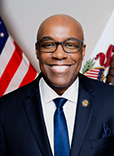
Chicago – Attorney General Raoul, as part of a coalition of states, submitted a comment letter opposing a proposed rule by the U.S. Department of Education that would cap federal student loans for graduate students in nursing, physician assistance and other health fields – a change that could worsen health care shortages across the country.
“This proposed rule will cut off access for many qualified students and will worsen nationwide labor shortages in vital fields, including nursing and education. Students may also turn to riskier and higher-interest borrowing,” Raoul said. “I join my fellow attorneys general in opposing this rule, and I remain committed to advocating for student borrowers in Illinois and across the country.”
The federal budget reconciliation signed into law last year newly limited the amount of federal student loans that graduate students can borrow to $20,500 each year and $100,000 total. Students pursuing “professional” degrees, however, are permitted to borrow up to $50,000 each year and $200,000 total. Congress broadly defined “professional degree” as any degree that “signifies both completion of the academic requirements for beginning practice in a given profession and a level of professional skill beyond that normally required for a bachelor's degree.”
Congress also provided a list of 10 examples, such as medical degrees and law degrees, but specified that professional degrees “are not limited to” those examples. The department’s proposed rule would take Congress’s list of 10 examples, plus clinical psychology, and make it exclusive, meaning only students pursuing those degrees would be eligible to borrow up to the higher loan amounts.
As Attorney General Raoul and the coalition explain, the proposed rule would exclude aspiring nurse practitioners, physician assistants, physical therapists and other professionals who are essential to states’ health systems and economies. For nursing schools and other programs that exceed the $20,500 annual cap, many students will be forced to seek private loans on worse terms or be priced out of higher education entirely.
In their comments, the coalition argues that the proposed rule violates federal law. They assert that the department ignored Congress’ clear intent by turning an illustrative list of degrees into a hard limit, leaving out nurses, physician assistants and other essential health professionals who depend on these loans to access and complete their education. Notably, the list of examples was originally devised in the 1950s, long before graduate programs in nursing, physician assistance and physical therapy became common. By freezing that list in place, the department has ignored decades of change in health professions and excluded health professionals who clearly fall within Congress’ definition.
Raoul and the attorneys general note that preventing students from borrowing the amounts needed to pay for programs such as nursing, physician assistant and physical therapy will result in a reduced supply of expert health care workers at a time when Illinois and other states are facing shortages. The letter urges the department to abandon its narrow definition of “professional degree” and devise a broader one that encompasses the full spectrum of degrees intended by Congress.
Joining Attorney General Raoul in submitting the comments are the attorneys general of Arizona, California, Colorado, Connecticut, Delaware, the District of Columbia, Hawaii, Maine, Massachusetts, Maryland, Michigan, Minnesota, Nevada, New Jersey, New Mexico, New York, North Carolina, Oregon, Rhode Island, Vermont, Virginia, Washington and Wisconsin, as well as the governors of Kansas and Kentucky.


